Functional Programming in Automation Testing with TypeScript and Playwright — Part I
Introduction
Functional Programming in Automation Testing
Functional programming in automation testing is a paradigm that leverages the principles of functional programming to design and write test scripts. Unlike traditional imperative testing approaches, functional programming focuses on creating test cases as pure functions, emphasizing immutability and composability. By using technologies like TypeScript and Playwright, testers can build robust, maintainable, and highly readable test frameworks.
This approach offers numerous advantages, including improved code quality, enhanced test coverage, and increased test automation efficiency. In this post, we will explore the world of functional programming for automation testing, examining its benefits and practical implementation.
Why TypeScript and Playwright?
Using TypeScript and Playwright for creating a test framework holds significant advantages in the context of automation testing:
- TypeScript's Strong Typing — TypeScript provides static typing, which means you catch errors at compile-time rather than runtime. This reduces the chances of introducing bugs and enhances code quality. It also offers code completion and better documentation, making it easier to write and maintain test scripts.
- Maintainability — TypeScript enforces strict coding standards and best practices, resulting in more maintainable code. Since automation tests are often long-lived, this is crucial for the longevity of your test framework.
- Code Readability — TypeScript's strong typing and cleaner syntax improve code readability. This is particularly important in testing, where clear and understandable test scripts can save time and reduce the learning curve for new team members.
- Playwright's Cross-Browser Support — Playwright supports multiple browsers (Chromium, Firefox, and WebKit). This cross-browser compatibility allows you to run the same tests across different browsers, ensuring reliability on various platforms.
- Performance and Reliability — Playwright is known for its speed and reliability in test execution. It offers a headless mode for faster testing and has built-in error handling, making it more robust for dynamic web applications.
- Unified API — Playwright provides a unified API for automating different browsers. You can write tests once and run them on multiple browsers, reducing the effort required for cross-browser testing.
- Accessibility Testing — Playwright includes features for accessibility testing, which is crucial for ensuring that web applications are usable by all users, including those with disabilities.
- Ecosystem and Community — TypeScript and Playwright are backed by strong developer communities with extensive documentation, making it easier to find support, resources, and plugins for various testing needs.
- CI/CD Integration — TypeScript and Playwright can be seamlessly integrated into CI/CD pipelines, enabling automated testing throughout the software development lifecycle.
In conclusion, TypeScript and Playwright together provide a robust, maintainable, and efficient solution for creating a test framework. They enhance code quality, cross-browser compatibility, and overall testing effectiveness.
What Does This Post Cover?
In this post, we will cover the essentials of functional programming in the context of automation testing. We will begin by explaining the core principles of functional programming and how they apply to testing.
We will then guide you through the installation of the required libraries, including TypeScript and Playwright, providing step-by-step instructions and code snippets to make the setup process straightforward.
Next, we will delve into setting up the project for your test framework. We will discuss the project structure, file organization, and the essential components needed to get your testing environment up and running. You can expect practical code examples that demonstrate each step, making it easy to follow along and implement the concepts in your own projects.
By the end of this post, you will have a solid understanding of functional programming principles in automation testing, a fully configured testing environment with TypeScript and Playwright, and the knowledge to begin writing efficient and maintainable test scripts.
What Is Functional Programming?
Functional programming is a programming paradigm that treats computation as the evaluation of mathematical functions and avoids changing state or mutable data. It emphasizes the use of pure functions, immutability, and higher-order functions to structure and solve problems. In functional programming, programs are constructed by composing functions, which promotes code that is more predictable, maintainable, and easier to reason about.
Core Principles of Functional Programming
Here are the core principles of functional programming:
-
Immutability:
- Immutability means that data, once created, cannot be modified. Instead of changing existing data, you create new data structures.
- In functional programming, immutability ensures that functions do not have side effects, making it easier to reason about and debug code.
- Immutable data is thread-safe, which is particularly important in concurrent or parallel programming.
-
Pure Functions:
- Pure functions are functions that, given the same input, always produce the same output without modifying any external state or variables.
- They have no side effects, meaning they do not change any data outside the function's scope.
- Pure functions are predictable and testable, making debugging and testing easier.
-
Higher-Order Functions:
- Higher-order functions are functions that can take other functions as arguments or return functions as results.
- They enable abstraction and code reuse. Common examples include
map,filter, andreduce, which work with arrays and allow you to apply a given function to each element. - Callback functions and closures are often used with higher-order functions to encapsulate behavior.
These core principles collectively aim to make code more reliable, maintainable, and easier to understand. By embracing immutability, pure functions, and higher-order functions, functional programming encourages a declarative and concise coding style that is well-suited for tasks like automation testing.
How Can Functional Programming Improve Automation Testing?
Functional programming concepts can significantly enhance automation testing in the following ways:
- Predictability and Testability — Pure functions produce consistent and predictable outputs for the same inputs, making it easier to write test cases and assert expected results. This predictability simplifies the process of identifying and addressing bugs.
- Maintainability — Immutability discourages the modification of data after it is created. In testing, this means that once a test setup is defined, it will not accidentally change during test execution, leading to more maintainable and reliable tests.
- Readability — Functional programming encourages a declarative and expressive coding style. Test scripts become more readable and self-explanatory, aiding both developers and testers in understanding the test logic.
- Scalability — The use of pure functions and immutable data structures reduces the likelihood of introducing bugs as your test suite grows.
- Composability — Higher-order functions and functional composition enable the creation of reusable test components. Test cases can be built by composing these components, promoting code reusability and reducing duplication.
- Parallel and Concurrent Testing — Immutability and pure functions eliminate data races and ensure thread safety, allowing tests to run concurrently without conflicts.
- Error Handling — Functional programming promotes proper error handling techniques, making it easier to catch and handle exceptions during test execution, leading to more robust and fault-tolerant tests.
- Abstraction — Higher-order functions and functional composition allow for the abstraction of common testing patterns, making it possible to create more generic and flexible testing frameworks.
- Cross-Browser Testing — The consistent and predictable nature of functional code aids in writing tests that are browser-agnostic, allowing you to execute the same tests across different browsers without code changes.
Incorporating functional programming concepts into automation testing can lead to more efficient, maintainable, and reliable testing frameworks. It helps address common testing challenges and encourages a structured, disciplined approach to writing tests, ultimately improving the quality of your software products.
Benefits of Using TypeScript and Playwright
Advantages of TypeScript in Automation Testing
Using TypeScript in automation testing offers several advantages:
- Static Typing — TypeScript provides a robust type system that allows you to define the types of variables, function parameters, and return values explicitly. This static typing helps catch type-related errors at compile-time rather than runtime.
- Code Quality — TypeScript enforces coding standards and best practices, leading to cleaner, more organized, and well-documented code.
- Intellisense and Autocompletion — TypeScript offers powerful editor features like intellisense and autocompletion, reducing the chances of syntax errors and speeding up development.
- Error Detection and Prevention — The TypeScript compiler detects and reports errors during development, preventing many common coding mistakes.
- Refactoring and Code Consistency — TypeScript facilitates code refactoring. You can confidently make changes, knowing that the type system will help identify and update all related code segments.
- Enhanced Tooling — TypeScript is well-supported by development tools like Visual Studio Code, which provide features like debugging, version control integration, and powerful extensions.
- Documentation and Self-Explanatory Code — Type annotations in TypeScript act as self-documenting code, reducing the learning curve for team members.
- Testing Framework Compatibility — TypeScript integrates easily with popular testing frameworks such as Playwright, Jest, Mocha, and Jasmine.
- Integration with TypeScript Projects — If your application code is also written in TypeScript, you can share typings and benefit from a unified codebase.
In summary, TypeScript's static typing and code quality enhancements lead to more robust, maintainable, and efficient automation testing scripts.
Advantages of Playwright
Playwright offers a range of benefits that make it an excellent choice for automation testing:
- Cross-Browser Support — Playwright supports Chromium (Google Chrome), Firefox, and WebKit (Safari), allowing you to run the same test scripts across different browsers.
- Fast Execution — Playwright is designed for high-performance test automation, offering faster test execution compared to many other automation libraries.
- Unified API — Playwright provides a unified API for automating different browsers, meaning you can write test scripts once and execute them across multiple browsers.
- Automatic Waiting — Playwright includes built-in mechanisms for automatically waiting for web elements to appear, become clickable, or reach a specific state, improving test reliability.
- Error Handling and Debugging — Playwright offers comprehensive error handling with detailed error messages and debugging capabilities.
- Headless and Headful Mode — Playwright supports both headless (invisible) and headful (visible) browser modes, allowing you to choose the mode that suits your needs.
- Mobile Device Emulation — Playwright enables emulation of mobile devices, making it possible to test the responsiveness of web applications.
- Access to Browser APIs — Playwright allows access to browser APIs and offers methods for interacting with features like geolocation and permissions.
In summary, Playwright's cross-browser support, fast execution, unified API, and features for error handling and emulation make it a powerful choice for automation testing.
How TypeScript and Playwright Complement Functional Programming
TypeScript and Playwright can seamlessly complement the functional programming paradigm in automation testing:
- TypeScript and Strong Typing — TypeScript's strong static typing aligns with the functional programming concept of type safety, ensuring data and functions are used consistently and correctly.
- Pure Functions and Immutability — TypeScript encourages the use of pure functions and immutability, reinforcing these core functional programming concepts.
- Functional Composition — TypeScript's support for functional composition allows testers to combine and chain functions to create complex test scenarios.
- Readability and Maintainability — The strong typing, clear syntax, and expressive code that TypeScript encourages lead to more readable and maintainable test scripts.
- Testing Framework Integration — TypeScript integrates seamlessly with popular testing frameworks, allowing you to apply functional programming principles within your testing workflow.
- Type Annotations and Documentation — TypeScript's type annotations serve as documentation within test scripts, which is especially valuable when following functional programming practices.
- Parallel and Concurrent Testing — Functional programming concepts like immutability and pure functions, combined with TypeScript's type system, make it easier to write concurrent code safely.
- Error Handling — Both TypeScript and functional programming emphasize proper error handling, ensuring that errors are well-managed in test scripts.
In conclusion, TypeScript and Playwright provide a strong foundation for embracing functional programming in automation testing. They reinforce core functional programming principles, enhance code quality and readability, and improve the overall reliability and maintainability of test scripts.
Conclusion
In the first part of this post, we explored the world of functional programming in automation testing. We examined the core principles of functional programming, discussed the advantages of using TypeScript and Playwright in this context, and highlighted how these technologies complement the functional programming paradigm. With a solid understanding of these concepts, you are now well-equipped to move on to the practical aspects of building a robust testing framework that leverages these principles.
elated topics

🌟 Functional Programming in Automation Testing with TypeScript and Playwright 🤖🚀 Part II
Welcome to the second part of our exploration into functional programming in automation testing. In this continuation, we will delve deeper into the practical implementation of the concepts we've discussed so far. Here's what you can expect in this part: Here are step-by-step instructions for i...
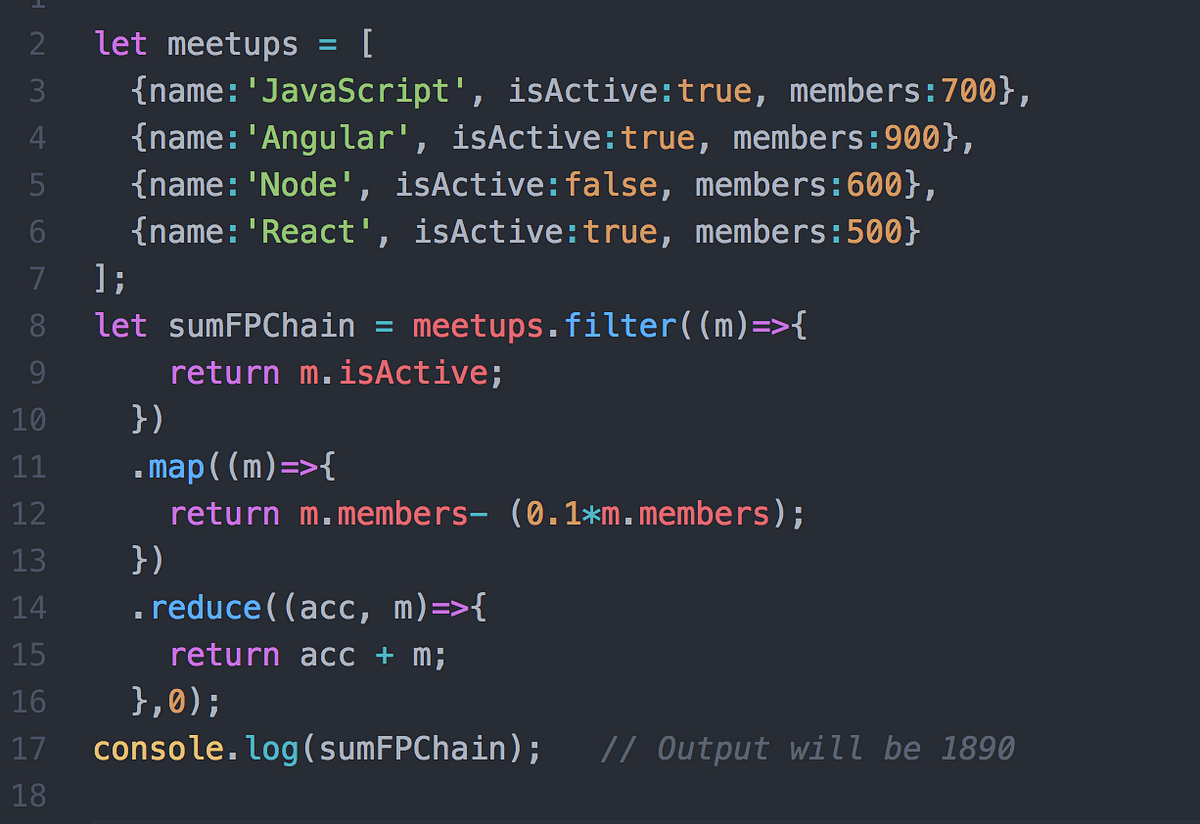
Embracing Functional Programming for Automation Testing: Unleashing New Possibilities
As Quality Assurance professionals, our mission is to ensure the reliability and performance of software applications. Automation testing is a cornerstone of this process, and the approach we take can make all the difference. Let's explore the world of functional programming and how it influences ou...
Using Chained Functions for Automation Testing with Playwright and TypeScript
Welcome to the world of chained functions for automation testing with Playwright and TypeScript. Building on the previously explored PageObject pattern, this topic introduces a powerful and efficient way to streamline your testing workflow. In this guide, we will dive into the concept of chaining...